From Club Runs to Solo Miles: A Brief History of Running Together
Explore the history of running together, from early organised clubs to today’s open community runs, and see which kind of group fits your routine.
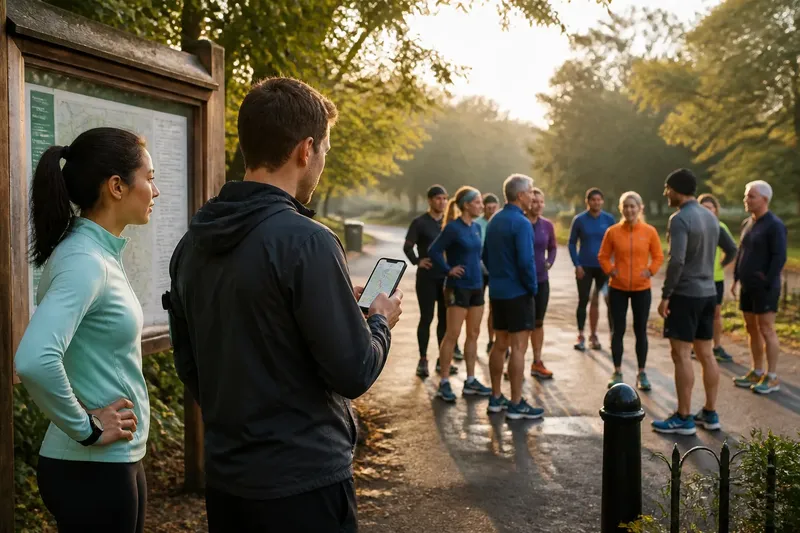
At the edge of a park, a runner waits beside a noticeboard while a friend checks the route on a phone. Nearby, a club group gathers for its usual session. The history of running together is a history of changing ways to meet, organise and share a run.
Organised running clubs took shape in the nineteenth century
Running clubs existed in Britain before recreational jogging became a common pastime. In the nineteenth century, athletics clubs organised running as a sport, with membership, scheduled activities and competition. Their approach differed from an informal pair of neighbours deciding to meet for a run: a club offered a named organisation and a shared programme.
That sporting tradition did not mean every club runner had the same aims. Clubs could bring people together around training and competition, while also giving members a regular place to meet. The important historical change was not that people stopped running informally, but that some runners began to organise their shared activity through enduring groups.
The jogging boom brought recreational running to wider audiences
In the 1960s and 1970s, jogging became more visible as a recreational activity in Britain and elsewhere. Guides and public discussion increasingly presented running as something people could do for fitness outside formal athletics. This broadened the idea of a runner: someone did not need to be a competitive athlete or belong to an athletics club to run regularly.
As more people took up recreational running, local clubs and informal groups could serve different needs. Some offered training and competition; others gave newcomers company and a routine. The growth of recreational running did not replace club athletics. It added more reasons and settings for people to run together.
Mass participation events created new meeting points
Large public road races helped make recreational running visible as a shared civic activity. The London Marathon, first held in 1981, became a prominent example in Britain. Events of this kind brought together competitive athletes, charity runners and people taking part for personal reasons, while their training could also lead runners to seek regular company.
A race is not itself a running group, but it can give people a common goal and a reason to meet beforehand. Friends may train together; clubs may organise sessions around an event; local organisers may invite runners preparing for their first race. These arrangements sit alongside ordinary runs that have no event at their centre.
Open community runs made joining less formal
In the twenty-first century, organised community runs have offered another visible way to meet local runners. parkrun began in Bushy Park, London, in 2004 as a free, timed weekly event. It is a walking, jogging or running gathering rather than a conventional athletics club, and its public, recurring format gives newcomers a clear place and time to turn up.
Other community groups may be hosted by volunteers, charities, running shops or local organisations. Some meet in parks; others start near a town centre or finish at a café. Their arrangements vary, so a public description is only a starting point: the meeting point, pace options and route style are worth checking before attending.
Say you have moved to a new neighbourhood and want company without joining a club straight away. You find a local group’s page, see that it meets at a park entrance, and message the organiser to ask whether newcomers can walk or run at an easy pace. At the first gathering, you follow the stated meeting routine and observe whether the group’s pace and atmosphere suit you; afterwards, you can decide whether to return or try another option.
Today’s running groups reflect different traditions
Informal partners, athletics clubs and open community runs are not stages that every runner passes through. They reflect different arrangements that have continued side by side. A friend offers flexibility, a club may provide a regular programme, and a community group can make a first visit feel less tied to membership.
- Informal partner: If you and a friend can agree on a meeting time and conversational pace, then plan a shared route; if schedules keep clashing, try a recurring group session instead.
- Athletics or running club: If the club lists a suitable pace group and welcomes newcomers, then ask about attending; if its sessions centre on goals that do not suit you, look for a more social group.
- Open community run: If the organiser confirms the meeting point and that newcomers are welcome, then attend and follow the group’s stated format; if the pace or route is unclear, ask before setting out.
- Event-based training group: If preparing for a named race gives you a useful shared purpose, then ask whether a club or local organiser runs sessions for it; if you prefer running without an event goal, choose a group with ordinary social outings.
- Solo running alongside group outings: If company helps you keep a routine but you also value quiet runs, then reserve space for both; if group plans make your week feel crowded, reduce the number of shared sessions.
- First visit: If the organiser explains where to meet and what happens if someone needs to stop, then you have practical details for deciding whether to go; if those basics remain unanswered, contact the organiser again or choose a clearer option.
How do the main ways of running together differ?
Did running clubs begin as recreational jogging groups?
No. In Britain, organised athletics clubs pre-date the broad recreational jogging boom of the 1960s and 1970s. Their sporting roots help explain why some clubs still offer structured training and competition alongside social running.
What changed during the jogging boom?
Running became more visible as a recreational activity beyond formal athletics. That gave people more reason to run for personal fitness and routine, whether or not they joined a club.
When did parkrun begin?
parkrun began in Bushy Park, London, in 2004 as a free, timed weekly event. Its open format offers a recurring local gathering without requiring the structure of conventional club membership.
Can a runner use more than one kind of group?
Yes. A runner might attend a club session, meet a friend on another day and run alone when that suits their schedule. These choices have long existed alongside one another rather than forming a required progression.
Choose a running group that fits your week
The history of running together shows how several arrangements took shape: athletics clubs brought an organised sporting structure, recreational jogging widened the reasons people ran, mass events supplied common goals, and open community runs created another way to gather. None makes the others obsolete.
For a practical starting point, compare the group’s meeting place, pace options, welcome for newcomers and expected commitment with the time you can comfortably set aside. If those details remain unclear, ask the organiser before going. That small conversation can help you choose a first run—and leave room to change your mind after you have seen how the group works.