Shorts, Tights or Loose Trousers? Choosing a Running Layer
Choosing running shorts, tights or loose trousers? Compare fit, coverage and feel to narrow your options and choose a layer that suits your run.
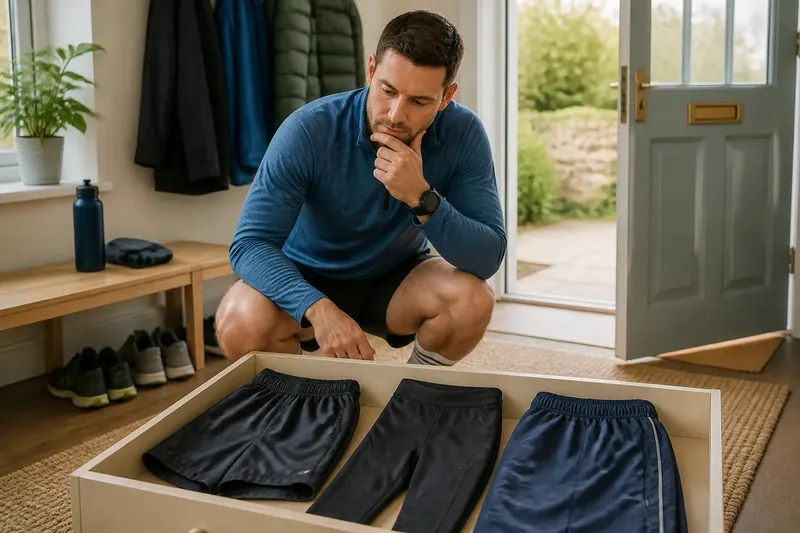
Choosing running shorts, tights or loose trousers can feel unexpectedly difficult when you are standing by the front door with a run planned and three different pairs in the drawer. Each option can work; the useful question is which one feels least distracting for this particular runner, route and set of conditions.
Consider an invented situation: Sam is preparing for a familiar run on a cool morning. Sam owns lightweight shorts, close-fitting running tights and loose track trousers, but has no settled preference. Instead of searching for a universal winner, Sam compares how each garment handles fit, coverage and personal comfort, then uses those observations to make a practical choice.
Start with what the layer needs to do
Running bottoms cover the same general area, but they create different sensations. Shorts leave more skin uncovered and allow air to circulate around the legs. Tights sit close to the body, covering more skin without loose fabric moving around. Loose trousers add coverage and a relaxed fit, though their fabric can shift as the legs move.
These differences matter because a runner may notice one feature more than another. Someone who dislikes fabric brushing against the thighs may prefer a close fit. Someone who wants more coverage may favour tights or trousers. Another runner may simply feel more at ease in familiar shorts. Comfort is personal, and the best choice is often the one that stays out of mind once the run begins.
It helps to separate two ideas that are easy to blend together: coverage and warmth. More coverage does not automatically feel more comfortable, and a close fit does not suit everyone. A garment’s fabric, cut and ventilation influence how it feels, so the label alone cannot tell Sam which option will work.
Compare shorts, tights and loose trousers
Shorts leave the legs relatively unconfined
Running shorts are a straightforward option when Sam wants minimal fabric around the legs. A split or shaped hem may allow room for movement, while an inner brief or liner can reduce the need for a separate layer. Some shorts have a loose outer shell; others sit closer to the body.
The trade-off is that shorts provide less coverage. A runner who feels exposed, dislikes cool air on bare skin or finds the hem moves awkwardly may not settle into them. The waistband and leg openings also deserve attention: a pair that shifts, pinches or rides up during an ordinary movement is unlikely to feel better once the run is under way.
Tights provide close coverage
Running tights cover the legs while keeping fabric close to the body. That can appeal to runners who prefer less movement in the material, or who want coverage without loose legs flapping or bunching. Their close fit can also feel more substantial than shorts, even when the fabric is lightweight.
Fit needs to be comfortable in several positions, not only while standing. Sam can check whether the waistband stays put, whether the fabric pulls at the knees and whether the garment feels restrictive when bending or taking a long stride. Tights that feel too compressive or expose more outline than the runner likes may be the wrong cut or simply the wrong choice for that person.
Loose trousers add a relaxed layer
Track trousers or other loose running trousers cover the legs without hugging them. Some runners like the roomier feel, particularly before a run or on outings where they want to keep their legs covered. A tapered ankle can reduce excess fabric near the shoes, while a wider leg gives a different, less fitted sensation.
Loose fabric can rub or gather during movement, and a long or wide hem may feel cumbersome. Sam should notice where the material falls in relation to the shoes and whether the legs swing freely. Trousers that work well for a gentle jog may feel annoying to a runner who dislikes any fabric movement; there is no need to force the preference.
Use a simple comparison rather than a universal rule
Sam begins by trying each garment at home, checking the waistband and moving through a few ordinary running motions: a squat, a forward step and a gentle jog in place. This is not a performance test. It is a convenient way to notice obvious pulling, slipping, bunching or irritation before choosing a pair for the planned outing.
Next, Sam considers the day’s conditions and the kind of coverage that feels welcome. A breezy morning might make bare legs less appealing; a mild day might make extra fabric feel unnecessary. The decision is not a forecast calculation. It is a judgement based on the weather Sam can observe and the clothing that feels comfortable to wear.
- Fit: Does the waistband stay in place without pinching?
- Movement: Does the fabric pull, ride up or gather when taking a stride?
- Coverage: Does the amount of skin covered feel comfortable?
- Fabric feel: Does the material rub, cling or distract?
- Conditions: Does the layer suit the weather and the runner’s comfort?
- Practical details: Are pockets, a liner or a drawcord useful for this outing?
These checks narrow the choice without assigning points or declaring a winner. If two pairs feel equally suitable, Sam can choose based on the detail that matters most that day: perhaps the shorts have a useful pocket, or the tights feel more comfortable in a light breeze. The goal is a comfortable decision, not an elaborate clothing system.
Let the first outing answer a specific question
Sam chooses the tights for the cool morning, not because tights are inherently better, but because they provide the coverage Sam wants and feel stable during a few movements at home. The planned run follows a familiar route, so Sam can pay attention to the clothing rather than spending the outing learning a new path at the same time.
During the run, Sam notices one thing: the waistband stays comfortable, but the lower legs feel warmer than expected. That observation is more useful than a vague verdict that tights are either good or bad. It suggests a next decision. On a milder day, Sam could try the shorts; if loose fabric is appealing, the trousers remain another option.
Imagine the same situation with a different starting point. If Sam’s shorts had ridden up during the gentle jog at home, Sam might set them aside for now and choose between tights and trousers. If the trousers had bunched near the shoes, that would be a reason to prefer another cut, not evidence that all loose trousers are unsuitable.
A short note after the run can keep the comparison concrete: “comfortable waistband; lower legs warmer than I wanted.” Sam need not record every detail or repeat the same garment in every condition. A few observations about fit and feel are enough to make later choices more informed.
Why does the right choice change between runs?
Are running tights better than shorts?
Neither is universally better. Tights offer close coverage, while shorts leave more of the legs uncovered; the right choice depends on which fit feels comfortable and what conditions the runner prefers.
Can loose trousers be worn for running?
Yes, if their cut and fabric allow comfortable movement. Check that the legs do not bunch or rub and that the hems feel unobtrusive near the shoes.
Should running bottoms be tight or loose?
They should feel secure without pinching or restricting movement. Some runners prefer close-fitting tights; others are more comfortable in shorts or loose trousers.
How can I choose a layer for changing weather?
Consider the conditions you can observe and how much coverage you want for that outing. If the day is uncertain, choose the garment that feels comfortable for the conditions you expect, rather than treating one pair as suitable for every run.
Keep the decision flexible
Sam’s useful result is not a permanent preference but a clearer way to choose. Tights suited the cool morning, while the warmer feeling in the lower legs gives Sam a reason to consider shorts when the weather is milder. Loose trousers remain an option if Sam wants their relaxed coverage and can find a cut that moves comfortably.
When choosing running shorts, tights or loose trousers, start with the sensation you want, then check fit and movement in the garment itself. If a pair irritates you at an easy pace, try another cut or fabric rather than assuming you must adapt. The best layer is the one that suits the run you are about to take, and your preference may shift with the weather, the route or simply the way you feel that day.